


Battery 10Ah vs 20Ah: Which Capacity Should You Choose?
The most common mistake in an ebike conversion: choosing the wrong battery. Either too small and you run out of range after 20 km, or oversized and you pay for capacity you'll never use. This guide shows you exactly what to check.
Contents
New to eBike conversions? This article is part of our beginner series — start with the eBike conversion kit market in Romania: beginner's guide for the full picture on kit types, installation and everything else before you commit to a battery.
First criterion: voltage (V) — no compromise
Before any discussion about Ah or Wh, the battery voltage must fall within the range accepted by the controller in your kit. Note that the controller sees the voltage of a full battery, not the nominal one — a 48V battery reaches 54.6V, a 52V one 58.8V and a 72V one 84V. A battery below the range underfeeds the motor; one above it can burn the controller's MOSFETs.
Not all MTX kits run on the same voltage: the 250W kit takes 36V or 48V, the 500W and 1000W kits 36V, 48V or 52V, the 1500W kit 48V or 52V, the 2000W kit 48V up to 72V and the 3000W kit 48V, 52V, 60V or 72V. For most conversions, 48V remains the standard choice.
How to calculate real range: the Wh formula
Ah alone don't tell the full story. A 36V 20Ah battery and a 48V 15Ah battery have completely different energy capacities. The correct unit for comparison is watt-hour (Wh):
More Wh means more range. Real-world consumption depends on motor power, your weight, terrain, and assist level. On mixed terrain (urban + light off-road), the estimates from our battery table are:
| Battery | Energy | Estimated range | Optional on kits | |
|---|---|---|---|---|
| 36V 15Ah | Downtube | 540 Wh | 55–65 km | 250W, 500W |
| 36V 20.5Ah | Downtube | 738 Wh | 65–85 km | 250W, 500W |
| 48V 17.5Ah | Downtube | 840 Wh | 60–80 km | 500W, 1000W, 1500W |
| 48V 20Ah | Triangle | 960 Wh | 70–85 km | 500W, 1000W, 1500W |
| 48V 22.5Ah | Downtube | 1080 Wh | 75–90 km | 500W, 1000W, 1500W |
| 52V 20Ah | Triangle | 1040 Wh | 55–65 km | 1000W, 1500W, 2000W |
| 52V 24Ah | Downtube | 1248 Wh | 75–95 km | 1000W, 1500W, 2000W, 3000W |
| 72V 20Ah | Triangle | 1440 Wh | 55–70 km | 2000W, 3000W |
Small battery (540–840 Wh): advantages and limits
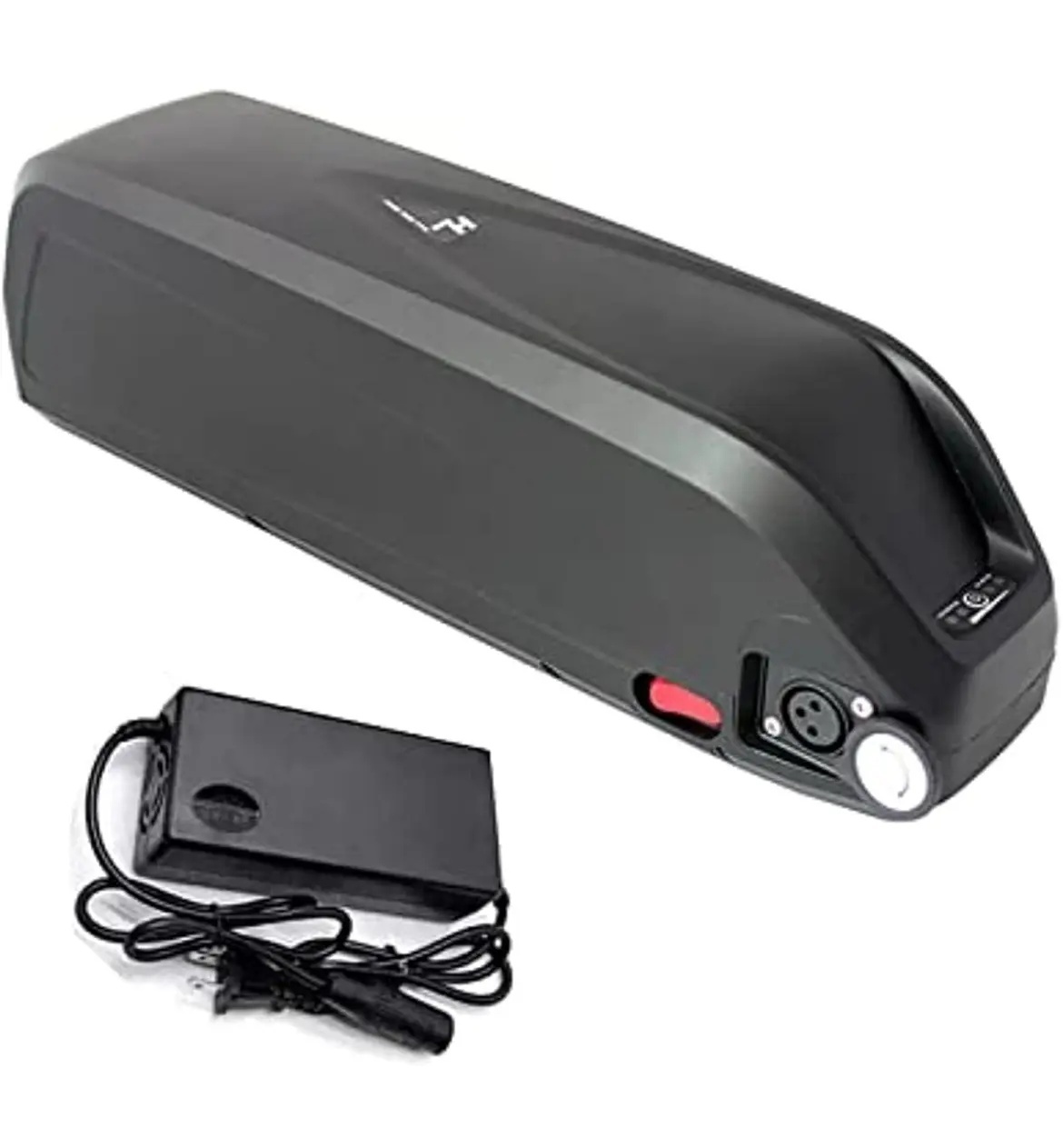
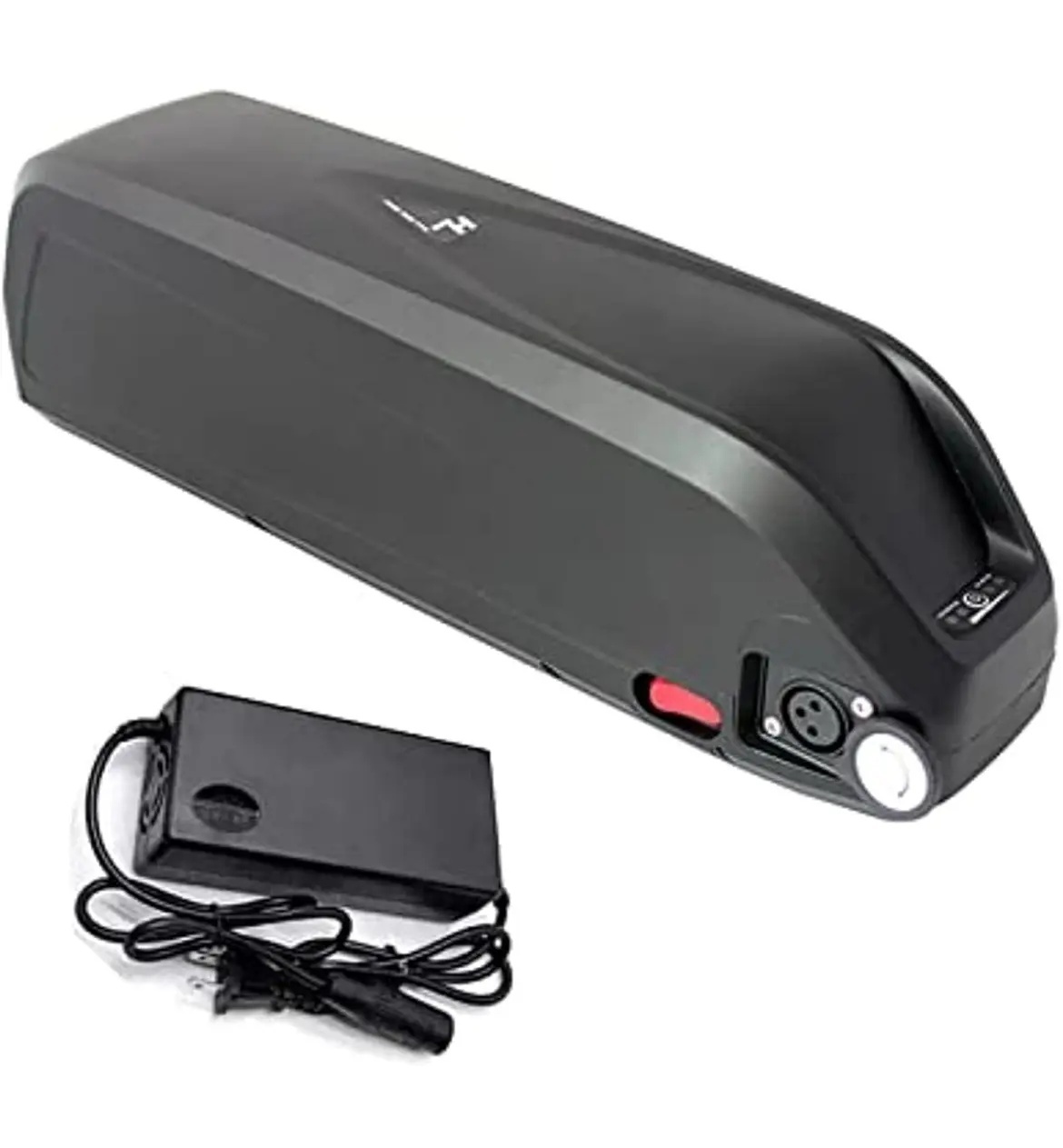
A small-class battery (36V 15Ah, 36V 20.5Ah, 48V 17.5Ah) is the logical choice for urban commuters covering 25–40 km daily who have access to a socket at the office or at home. The low weight and lower price make it the first choice for conversions using 250W or 500W kits.
Advantages of small capacity
- Weight: batteries in this class weigh ~3–4.5 kg — minimises the impact on bike handling.
- Price: the price is lower than for the 960 Wh and larger batteries.
- Charge time: with the included charger, batteries in this class charge fully in ~3–6 hours. You can charge overnight without worry.
- Compact dimensions: mounts more discreetly on the frame, rack, or in a bag.
Limits of small capacity
Less energy means fewer kilometres at the same riding style: 540 Wh gives you 55–65 km and 840 Wh gives 60–80 km, against 75–95 km for the large batteries. If you have long daily distances or routes with many climbs, a large-class battery gives you more reserve.
Large battery (960–1440 Wh): range and energy reserve
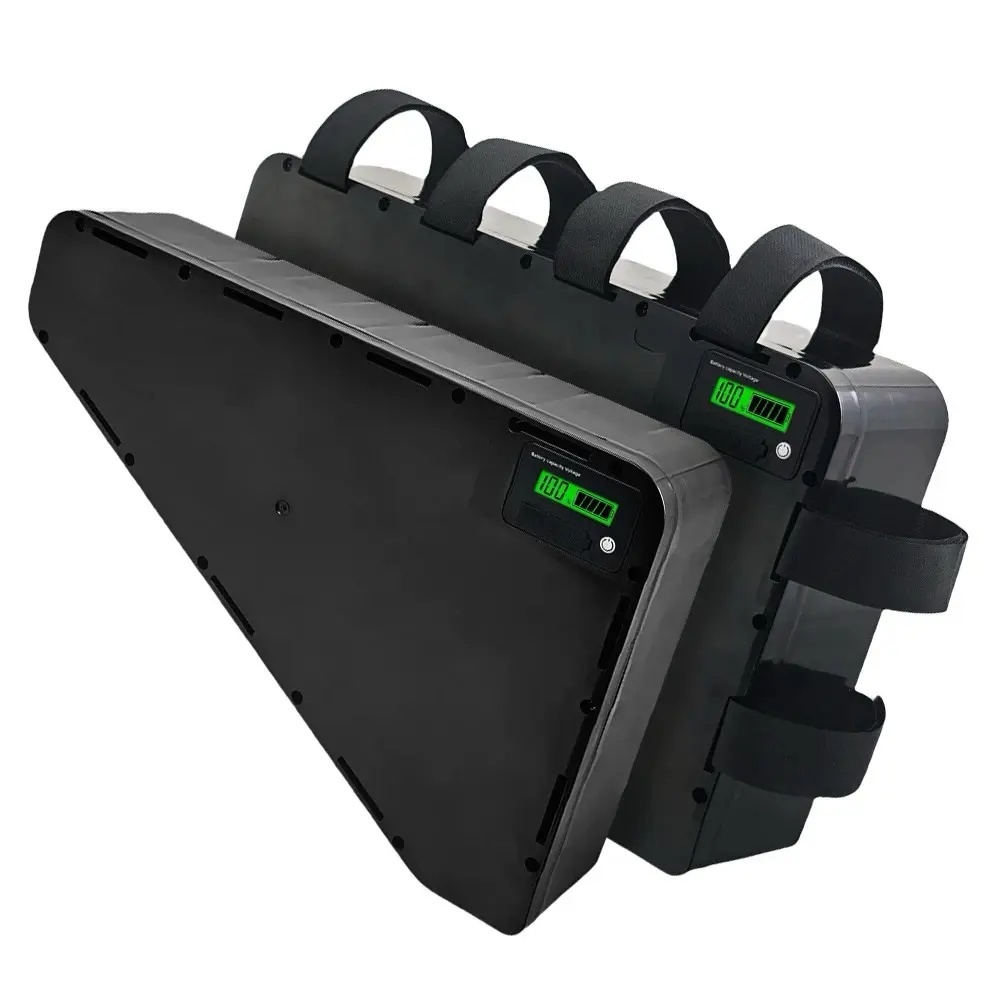
If you want 70+ km of range without recharging, or you have a 1000W or larger kit, a large battery gives you the most energy. The range runs from 960 Wh (48V 20Ah) to 1440 Wh (72V 20Ah), in downtube or triangle format.
Advantages of large capacity
- Estimated range of 55–95 km depending on the battery and terrain (see the table above).
- BMS with full protections, listed on each battery's product page.
- Longer lifespan: a large battery discharged daily to 50% does twice as many km as a small one discharged 100% — charge cycles are spread over more actual energy.
- Consistent performance: internal voltage drops more slowly as it discharges — the motor maintains power over a longer distance.
Third criterion: the battery BMS
The BMS (battery management system) protects the cells: it watches voltage, temperature and current and shuts the battery down if anything leaves its limits. Every battery in the range has its BMS rating on the product page, and each kit has its own optional batteries at checkout.
The optional batteries for each kit:
| Kit | Optional batteries |
|---|---|
| 250W | 36V 15Ah, 36V 20.5Ah |
| 500W | 36V 15Ah, 36V 20.5Ah, 48V 17.5Ah, 48V 22.5Ah, 48V 20Ah |
| 1000W and 1500W | 48V 17.5Ah, 48V 22.5Ah, 52V 24Ah, 52V 20Ah, 48V 20Ah |
| 2000W | 52V 24Ah, 72V 20Ah, 52V 20Ah |
| 3000W | 52V 24Ah, 72V 20Ah |
See all batteries in the e-bike batteries category.
Head-to-head comparison
| Criterion | 540–840 Wh | 960–1440 Wh |
|---|---|---|
| Price | Compact, affordable | Higher capacity, more expensive |
| Weight | ~3–4.5 kg | ~5–8.5 kg |
| Estimated range | depends on Wh — see the battery table above | |
| Charge time (included charger) | 3–6 hours | 4–7 hours |
| Lifespan (cycles) | 800–1000 cycles | 800–1000 cycles |
| Frame mounting | Easier (compact) | Requires space |
| Estimated cost per km | Similar | Lower (range/price) |
When to choose the small battery, when to choose the large one
Choose the small battery (540–840 Wh) if:
- You're using a 250W or 500W kit for urban commuting under 40 km
- You have daily access to a socket — you charge fully every night
- Total bike weight matters — you carry it upstairs or load it into a car
- Your initial budget is limited and you want to test the conversion
- Your routes are mostly flat with no significant elevation changes
Choose the large battery (960–1440 Wh) if:
- You have a 1000W or higher kit and want the most range
- You want 70+ km range without intermediate recharging
- You ride routes with climbs — consumption increases significantly compared to flat terrain
- You have no access to a socket at your destination and charge only once a day
- You want to extend battery lifespan through partial discharges
Batteries available on all4ebikes.com are selected to be compatible with MTX kits and include a BMS with full protections. Each battery comes with a charger matched to its voltage (for example 54.6V for the 48V packs) and a 12-month warranty.
See all batteries → Conversion kits →Downtube vs triangle: which mounting format should you pick?
Capacity and BMS current are not the only variables — where the battery physically sits on the frame affects handling, ease of removal, and how discreet the conversion looks. Downtube batteries mount along the down tube, mimicking the shape of a standard e-bike battery, and generally offer the widest capacity range. Triangle batteries fill the main frame triangle, which lowers the centre of gravity slightly and suits MTB or trekking frames with enough clearance.
Neither format is objectively better — the right choice depends on your frame geometry and how much you value a factory-integrated look versus mounting flexibility. We compare both formats side by side, including weight distribution, theft security, and which frame shapes suit each, in downtube vs triangle battery: full comparison.
Charging habits that extend battery lifespan
Capacity on the spec sheet is a starting point, not a guarantee — how you charge and discharge the pack day to day has a bigger effect on long-term performance than most riders expect. A few habits make a measurable difference over hundreds of cycles:
- Avoid habitually running the battery to 0%. Deep discharges stress the cells more than partial ones. Charging from 30–40% up to 80–90% on most days, and only charging fully before a long ride, extends usable lifespan.
- Don't leave the battery on the charger for days. Once it reaches 100%, unplug it. Modern BMS units handle trickle charging safely, but disconnecting promptly avoids unnecessary time at full voltage, which is the state that ages lithium cells fastest.
- Store at 40–60% charge if not riding for weeks. Storing a battery fully charged or fully empty for extended periods accelerates capacity loss. If you're not riding through winter, charge to roughly half and check it monthly.
- Avoid charging immediately after a hot ride. Let the pack cool to near room temperature first — charging a battery that's still warm from heavy use adds thermal stress on top of the charge cycle itself.
- Keep it dry and out of direct sun when parked. Heat is the main long-term enemy of lithium cells; a battery stored in a hot garage or left in direct sunlight will lose capacity faster than one kept at moderate, stable temperatures.
These habits, combined with buying a battery whose BMS and cell quality actually match your kit, are what separate a pack that still holds 80% capacity after two years from one that needs replacing after one season. For the full technical breakdown of cycle counts, degradation curves and when to actually replace a pack, see e-bike battery lifespan and maintenance. And since charging cost scales with how deeply and how often you charge, if you're curious what that adds up to monthly, we break it down in how much does it cost to charge an e-bike battery.
Cell quality — why it matters more than price
Two nominally identical 48V 20Ah batteries can have very different prices. The difference is not the commercial margin — it's cell quality. Low-quality cells have a real capacity of 1.8–2.0Ah per cell instead of 2.5–3.0Ah, which means a nominally 20Ah battery may actually deliver 14–16Ah in real use.
What to check:
- High-quality 18650 or 21700 cells — check whether the seller specifies the exact cell model and real capacity per cell (minimum 2.5Ah). Any serious seller should provide this information on request.
- BMS with full protections — overvoltage, undervoltage, short circuit, overcurrent, overheating.
- CE or UN38.3 certification — UN38.3 is the international standard for lithium battery transport; its presence indicates the pack has passed real safety tests.
- State-of-charge indicator — LED or built-in display on the battery. Useful for a quick check without a handlebar display.
- 500+ cycles guaranteed at 80% capacity — any quality battery must state this explicitly.
Frequently asked questions
Can I use a 52V battery on a 48V MTX kit?
It depends on the kit. The 500W, 1000W, 1500W, 2000W and 3000W MTX kits also accept 52V batteries, the 250W kit does not. A fully charged 52V battery reaches 58.8V, so always check the voltage range on the controller label and use the 52V charger, not the 48V one.
What range does a 48V 17.5Ah battery provide on a 1000W kit?
According to our battery table, 60–80 km at moderate assist (840 Wh). Range drops on steep climbs and under heavy load.
What is a BMS?
BMS (Battery Management System) is the electronic circuit built into the battery that protects the cells against overvoltage, undervoltage, short circuit and overcurrent. Its rating is listed on each battery's product page.
Can I connect two batteries in parallel for more range?
Yes, technically possible if the batteries are identical in model and voltage, and have the same charge level at the time of connection. A dedicated parallel connector (Y-splitter with equalisation current protection) is required. Never connect two different batteries or batteries at different charge levels — the equalisation current can damage both packs.
How long does charging take and what is the lifespan of an ebike battery?
With the included charger, the 36V 15Ah charges in 3–5 hours and the 48V 22.5Ah in 5–7 hours. Quality cells offer 800–1000 full cycles at 80% capacity. If you charge partially (e.g. from 30% to 80%), cycles are counted partially and lifespan increases.
Conclusion
Choosing a battery isn't about the biggest or the cheapest — it's about the right match for your kit and the way you ride.
If you have a 250W or 500W kit and commute 30–40 km — a 36V 15Ah Downtube Battery is the complete solution without overpaying. If you have a 1000W or 1500W kit or want a large range reserve — 48V 22.5Ah Downtube or 48V 20Ah Triangle are good choices on those kits; so are the 52V 20Ah and 52V 24Ah, all optional on your kit. For the 2000W kit you can choose the 52V 24Ah downtube, the 72V 20Ah triangle or the 52V 20Ah triangle; for the 3000W kit, the 52V 24Ah downtube or the 72V 20Ah triangle.
Not sure which capacity fits your exact setup? Contact us — we'll recommend the right battery for your kit and specific routes.
Reviews