


Is the Conversion Kit Compatible with My Bike? Verification Guide
Before ordering, you need to check 4 key criteria: wheel size, axle type, brake type and sprocket count. Tick all four and the kit installs directly. This guide explains each criterion in detail, plus how to measure them yourself.
Contents
If you haven't picked a kit power yet, our guide to choosing the right conversion kit power is worth reading first — every power option from 250W to 3000W shares the same axle, brake and sprocket criteria below (wheel sizes vary by power: the 500W kit comes in 27.5" and 29", the 3000W kit in 26" and 27.5"), so choosing power and confirming compatibility are two separate decisions. Once you've confirmed compatibility here, our complete installation guide walks through the full fitting process step by step.
Criterion 1: Wheel size
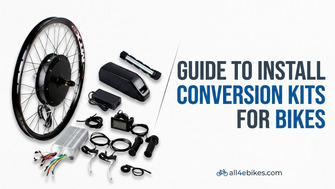
The most important criterion. The conversion kit is a complete wheel with the motor integrated into the hub — the original rear wheel is replaced with this motorised wheel. The size must be identical to your original rear wheel so that your tyre and inner tube fit and the bike geometry remains correct.
| Wheel size | International standard | MTX kit compatibility |
|---|---|---|
| 26 inch | ETRTO 559 | ✓ Available (except the 500W kit) |
| 27.5 inch (650B) | ETRTO 584 | ✓ Available |
| 28 inch / 700c / 29er | ETRTO 622 | ✓ Available — select 29" (except the 3000W kit) |
| 20 inch (BMX/folding) | ETRTO 406 | ✗ Not available as standard |
| 24 inch | ETRTO 507 | ✗ Not available as standard |
How to check: look on the sidewall (side of the tyre). You’ll find the size printed there, for example “26 x 2.0”, “27.5 x 2.1” or “700 x 35c”. The first number is the wheel diameter.
Criterion 2: Rear axle type
The axle is the metal rod on which the wheel is secured in the frame’s dropout. MTX All4eBikes kits are designed for quick-release (QR) axle with 135mm spacing — the most common standard on MTB, trekking and city bikes produced until approximately 2015.
| Axle type | Typical dimensions | Compatibility |
|---|---|---|
| Quick-Release (QR) | 10mm x 135mm (rear) | ✓ Directly compatible |
| Solid axle | 10mm x 135mm (rear) | ✓ Compatible |
| Thru-axle (TA) | 12mm x 142mm or 12mm x 148mm | ✗ Requires adaptor |
| Boost thru-axle | 12mm x 148mm | ✗ Requires adaptor |
How to check: open the rear dropout of your bike. If the wheel comes out by simply flipping a small lever (QR), you’re on the right track. If you need to unscrew an axle with a key, it’s a thru-axle — contact us before ordering.
Criterion 3: Brake type
Good news: MTX kits are compatible with all common brake types. The motor hub has ISO 6-bolt holes for a disc brake rotor and is also compatible with v-brake (rim brake) systems.
✓ Compatible with MTX kit:
- Disc brake (hydraulic or mechanical) — your original rotor bolts directly onto the motor hub
- V-brake (cantilever) — the motor rim is ready for standard brake pads
- Sensor brake levers included in the kit cut motor power automatically when braking
Disc rotor size doesn't affect compatibility either — 160mm, 180mm and 203mm rotors all bolt onto the same ISO 6-bolt pattern on the motor hub flange. Whatever its diameter, your current rotor will fit; only the corresponding brake caliper mount position on the frame or fork needs to match, which the conversion doesn't change since the front end of the bike is untouched.
✗ Watch out for:
- Drum brake (integrated in the hub) — incompatible, the wheel must be replaced
- Coaster brake (back-pedal braking) — incompatible with hub motor
Criterion 4: Sprocket count (cassette)
The MTX motor hub has an external thread for a freewheel (1.375" x 24 TPI), not a cassette body. The kit includes a 7-speed freewheel, not pre-fitted, which you screw onto the motor hub during installation — your old cassette or freewheel does not move across.
8 to 12-speed cassettes cannot be fitted to the motor hub, and 8-speed or higher shifters are not compatible with the 7-speed freewheel (per the freewheel product sheet). If your bike has 8 or more rear speeds, it will run a 7-speed drivetrain after the conversion; if you are not sure what that means for your bike, ask us before ordering. A replacement freewheel is also available in our parts range.
How to measure your dropout width and axle
If you can't find the specifications in your bike's manual, measuring directly takes about five minutes with a tape measure or a set of calipers.
- Remove the rear wheel from the frame so you have a clear line of sight across the dropouts.
- Measure the distance between the inside faces of the two rear dropouts, where the axle sits — not the outside of the frame. This is your rear spacing, typically 135mm for QR bikes.
- Measure the axle diameter itself with calipers if available — 10mm indicates QR or solid axle, 12mm indicates a thru-axle.
- Check for a lever — if the axle has a cam lever you flip to release it, it's QR. If it requires a hex key or has a threaded end cap, it's a thru-axle or bolt-on axle.
- Photograph the open dropout with a coin or ruler next to it for scale if you want a second opinion — send it to us via the contact form below and we'll confirm compatibility.
What does NOT affect compatibility
- Frame material (aluminium or steel) — doesn’t matter for fitting the kit on the rear wheel; for carbon frames see the FAQ below (the included torque arms are not compatible with carbon)
- Bike brand — kits are universal, not brand-specific
- Age of the bike — a 20-year-old bike with QR 135mm is just as compatible
- Suspension type (hardtail or rigid) — kit works on both; full-suspension requires checking battery clearance
- Front derailleur speed count — not affected by the conversion
Frame clearance for battery and controller mounting
Wheel, axle, brakes and sprocket cover whether the motor fits — but you also need somewhere to mount the battery and controller. This is rarely a blocker, but it's worth checking before you order rather than after.
- Downtube batteries mount on the down tube, the diagonal tube between the bottom bracket and the head tube — check there's a clear run without bottle-cage bolts or cable routing in the way.
- Triangle batteries sit inside the main frame triangle and need enough standover clearance between the top tube and the battery casing — tighter on smaller frame sizes.
- The controller is usually strapped under the saddle or to the seat tube — on smaller frames, confirm there's room without it fouling the rear tyre at full suspension travel or full pedal-stroke clearance.
Full-suspension bikes: what to check
The kit itself — motorised wheel, controller, display, sensors — works identically on hardtail and full-suspension frames; nothing about the rear shock or linkage affects electrical or mechanical fitment. The one thing worth checking is battery placement: full-suspension frames often have a smaller or oddly-shaped front triangle to accommodate the shock and linkage pivots, which can limit which battery shape fits without rubbing against the shock body during travel. If your front triangle is unusually compact, a downtube battery is usually a more reliable fit than a triangle battery on a full-suspension frame.
Fat bike compatibility
Fat bikes (typically 4"–5" tyres on wide rims) follow the same four criteria above, but wheel size and dropout spacing both tend to differ from standard bikes — fat bike rear spacing is very commonly 170mm or 190mm rather than the 135mm standard covered here, and rim/tyre combinations vary more between models. If you're converting a fat bike specifically, our fat bike conversion kit guide covers the additional dimensions to check before ordering.
Step-by-step: confirming compatibility before you order
If you're ordering online without a bike shop nearby to check for you, this short process avoids the most common fitment mistakes:
- Read the tyre sidewall for the wheel size code (e.g. “27.5 x 2.1” or “700 x 35c”) and note it down.
- Open the rear dropout and note whether release is by lever (QR) or requires a tool (thru-axle), then measure the spacing as described above.
- Identify your brake type — disc rotor bolted to the hub, or rim brake pads gripping the wheel rim. Drum and coaster brakes are the only exclusions.
- Count your rear speeds — the kit comes with a 7-speed freewheel, so a bike with 8 or more rear speeds will run 7 speeds after the conversion; it doesn't change which kit you order.
- Cross-check all four against the tables above before adding a kit to your cart. If everything lines up, you're clear to order; if anything is uncertain, send us a photo before you buy rather than after.
Quick checklist before ordering
- Rear wheel size: 26", 27.5" or 29" (28" = order 29") — check tyre sidewall ☑
- Axle type: QR (lever release) = compatible; thru-axle (key unscrew) = verify ☑
- Brakes: disc or v-brake = compatible; drum or coaster = incompatible ☑
- Rear dropout width: measure between the frame dropouts — must be 135mm (standard QR rear) ☑
- Space for controller and battery: confirm you have room to mount the controller (typically under the saddle or on the frame) ☑
- Rear speeds: the included freewheel has 7 speeds; 8 to 12-speed cassettes do not fit the motor ☑
Send us a photo of your rear wheel and dropout with a description of the axle type. We’ll confirm compatibility within 24 hours, free of charge.
Send a photo → Choosing kit power →Frequently asked questions
Does the kit work with my 28-inch city bike?
Yes. 28-inch bicycles (standard in Europe for city and trekking bikes) use 700c / 29-inch rims, which is a standard size for All4eBikes MTX kits. When ordering, select the 29-inch variant.
Is the kit compatible with hydraulic disc brakes?
Yes. The MTX rear hub motor wheel has ISO 6-bolt disc brake mounting holes. Your existing brake rotor bolts directly onto the motor hub without adaptors. The brake levers included in the kit already feature motor cut-off sensors that disengage the motor automatically when braking — compatible with both hydraulic and mechanical systems.
Can I fit the kit to a thru-axle (12mm) bike?
Standard MTX All4eBikes kits are designed for QR 135mm rear axles. A 12mm thru-axle requires specific adaptors or a special hub — it is not directly compatible. Contact us with your bike specifications before ordering.
Does the kit work on a carbon frame bike?
The kit mounts on the rear wheel and doesn’t require any frame modifications. The only aspect to verify on a carbon frame is whether the rear dropout properly handles the QR axle clamping force. Note, however, that the torque arms included in the kit, which must be fitted from 1000W upward, are not compatible with carbon frames (per the torque arm set specification). On a carbon frame, contact us before ordering.
How do I measure my dropout width without a manual?
Remove the rear wheel and measure the distance between the inside faces of the two dropouts, where the axle sits — not the outside edges of the frame. Most QR bikes measure 135mm. If you don't have calipers, a tape measure held flat across the opening is accurate enough to distinguish 135mm from 142mm or 148mm thru-axle spacing.
Will a triangle or downtube battery fit my frame?
Most standard diamond-frame bikes fit either battery type. Triangle batteries need standover clearance between the top tube and the battery casing, which can be tight on small frame sizes; downtube batteries need a clear run along the downtube without bottle bosses or cable routing in the way. Compact and full-suspension frames sometimes fit one type better than the other — check our battery range for dimensions before ordering.
Is a fat bike compatible with the standard MTX kit?
Not always in the standard configuration — fat bikes commonly use 170mm or 190mm rear spacing rather than the 135mm covered by the standard MTX kit, and wheel/tyre combinations vary more between models. Check our fat bike conversion guide for the specific dimensions to verify first.
Does disc rotor size (160mm vs 180mm vs 203mm) matter for compatibility?
No. All common rotor sizes bolt onto the same ISO 6-bolt pattern on the motor hub flange, so your existing rotor transfers across regardless of its diameter. The only thing that matters is that your caliper mount on the frame or fork already matches that rotor — which the conversion doesn't change, since it only replaces the rear wheel.

Reviews