


Second-hand e-bike or a conversion kit on your own bike? What to check and what wins
A second-hand electric bike looks like the cheapest way to get an e-bike. Sometimes it is. The catch is that the most expensive part, and the hardest one to check, the battery, is also the one that ages fastest. Below you will find the full checklist for a used e-bike, the real cost of a new kit fitted to the bike you already own, and the situations where each option wins.
Contents
The short answer
If you already own a good bike with a sound frame, a new kit is usually the safer choice: you know exactly what you get, you have a warranty and you pick the power and the battery. A second-hand e-bike is only worth it when the battery has a clear history, the seller lets you test it and the price reflects how much it has been used.
| Criterion | Second-hand | New kit on your bike |
|---|---|---|
| Battery condition | Unknown, hard to check | New, chosen by you |
| Warranty | Usually none left | 24 months on the motor, 12 months on the other parts and the battery |
| Power | Whatever the model you find has | Your choice, from 250W to 3000W |
| Bike | A different frame and geometry | The bike you already know |
| Right of return | Practically none | 14 days from delivery |
| Effort | Take it and ride | 2-3 hours of fitting, by yourself or by us in Bucharest |
What you actually buy with a used e-bike
On a regular second-hand bike you check the frame, the brakes and the drivetrain. On an electric one you add three components that can each cost as much as half the bike: the battery, the motor and the controller. Of the three, the battery has the shortest life.
- The battery wears with every charge. A quality battery that is looked after properly usually lasts 3-6 years. Buy a 3-year-old bike and you may be buying a battery close to the end of its life. More in our guide on e-bike battery lifespan.
- The motor lasts long, but not through everything. A brushless hub motor has few moving parts. What kills it is water getting in at the axle, a cable broken where it leaves the axle and repeated overheating.
- The controller and the display are electronics. They either work or they don't. A burnt controller can be replaced, but you need to know which model and which amperage you need.
On integrated systems (Bosch, Shimano, Yamaha) the battery has its own mount and its own communication. You can only replace it with an original battery from the same system. The batteries we sell are made for kits with a universal controller, not for these systems. Find out the price of a new original battery for that model before you negotiate.
The battery: how to check it before you pay
You cannot see inside a battery, but you can learn enough not to buy blind. Ask the seller to charge the battery fully before the viewing and run the checks below.
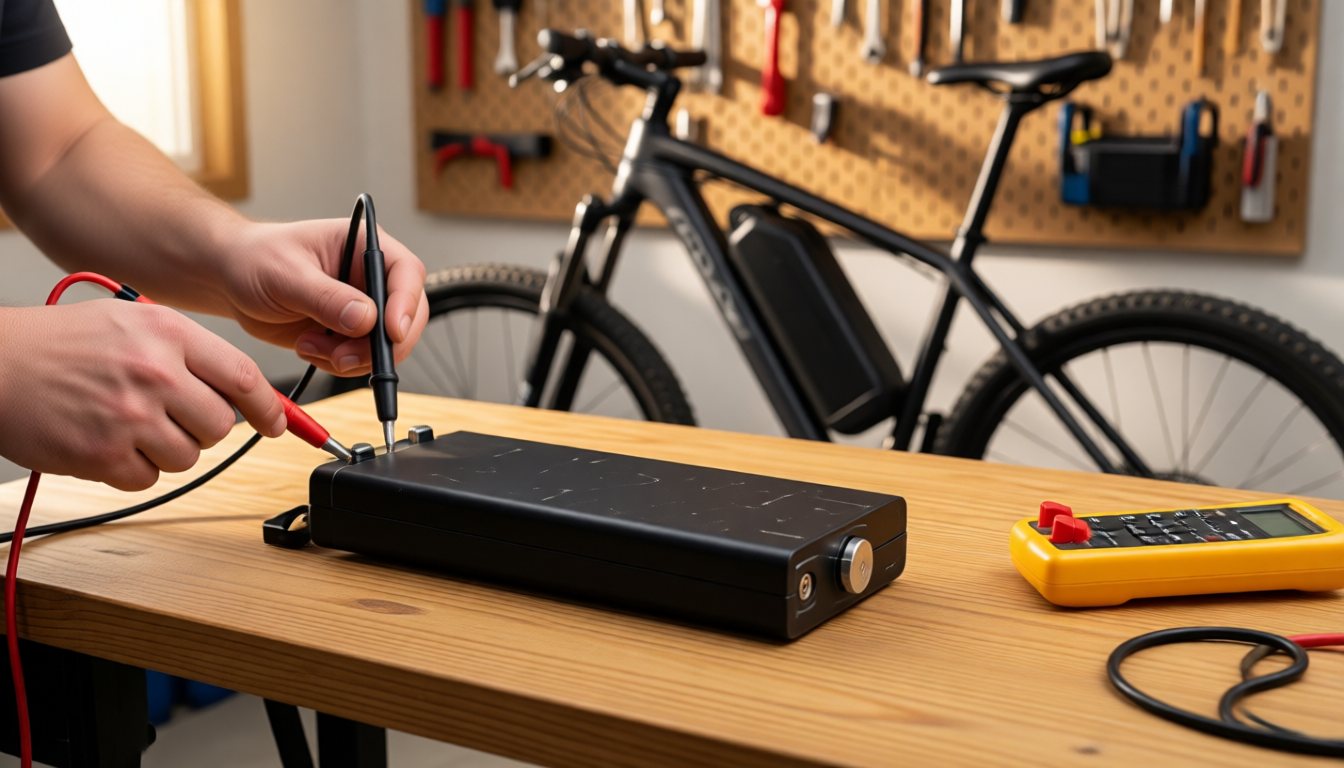
Voltage at full charge
With a multimeter on the battery terminals (or on the display, if it shows volts), a full battery should be close to the maximum for its voltage: around 42V for a 36V battery, 54.6V for a 48V one and 58.8V for a 52V one. A reading well below that, after a full charge, means tired or unbalanced cells.
Behaviour under load
Take a test ride at full throttle, and up a hill if there is one nearby. Watch the battery indicator. If it drops several bars when you accelerate and climbs back when you let go, the cells can no longer deliver the current asked of them. It is one of the clearest signs of a worn battery.
Casing and connectors
The casing must not be swollen, cracked or glued. The connectors must not be melted or blackened. Any sign that the casing has been opened means the battery was repaired or re-celled by someone you know nothing about.
Age and history
Ask when the battery was bought, how many kilometres the bike has done and how it was stored over winter. A battery left flat for months in a cold garage can lose a lot of capacity even if the bike looks new.
If the seller won't let you charge and test the battery, assume it has no battery and negotiate the price accordingly. To see what a new one would cost, check our e-bike batteries and their prices.
Full viewing checklist
After the battery, go through the rest of the bike. The list below takes 20-30 minutes and can save you a repair that costs more than the bike.
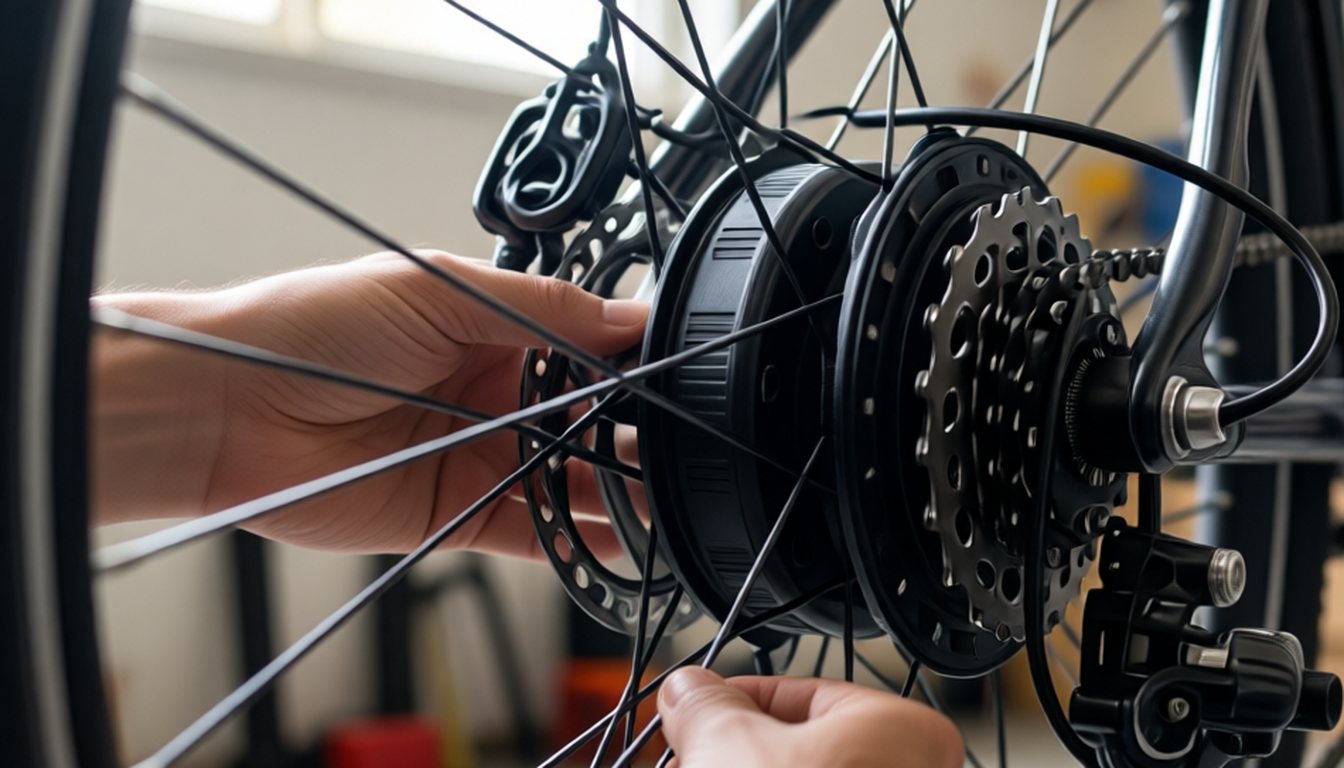
- Start-up and display. Switch the system on and watch the screen. Bad sign: an error code at start-up points to a sensor, motor or controller problem.
- Motor. Lift the wheel, spin it by hand, then with the throttle. Bad sign: rubbing, bearing noise or jerking means worn bearings or a Hall sensor fault.
- Motor axle. Grab the wheel and move it sideways. Bad sign: play in the axle and turning marks in the fork show the nuts have loosened under torque.
- Motor cable. Look where the cable leaves the axle. Bad sign: torn insulation or a crushed cable; it is the most common failure on hub motors.
- Frame and fork. Check the welds and the dropouts that hold the wheels. Bad sign: cracks at the dropouts are a reason not to buy, whatever the price.
- Brakes. Brake hard at speed. Bad sign: thin discs or worn pads; the motor must cut out when you brake.
- Charger and paperwork. Ask for the original charger and the invoice. Bad sign: a missing invoice proves nothing bad, but it leaves you with no history and no proof of origin.
If the owner has already converted the bike, look closely at the fork or the frame ends where the motor is mounted. At higher power, without torque arms, the axle can spin and deform the dropout. We explain why in the article on why you need a torque arm.
Red flags that should make you walk away
The battery "just needs charging" and cannot be tested. The charger is missing and the seller doesn't know the battery voltage. The battery or controller casing has been opened. The frame is cracked. The price is far below similar bikes with no clear explanation.
None of these signs means for sure that the bike is a problem. It does mean that you take on all the risk, with no warranty and no right of return.
The kit option: what you get
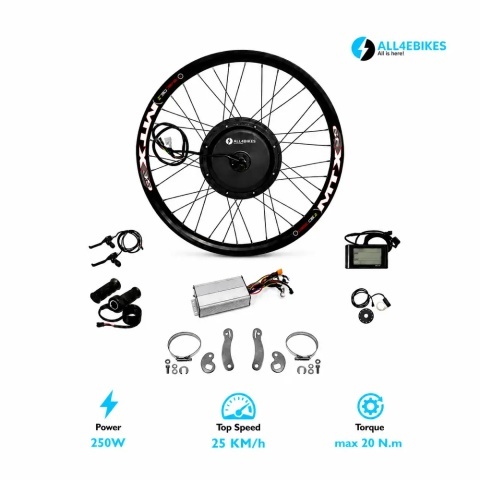
A conversion kit turns the bike you already own into an e-bike. One of the wheels is replaced by a motor wheel, and the display, throttle and brake levers go on the handlebar. The main advantage over second-hand: everything is new and you know exactly what you have.
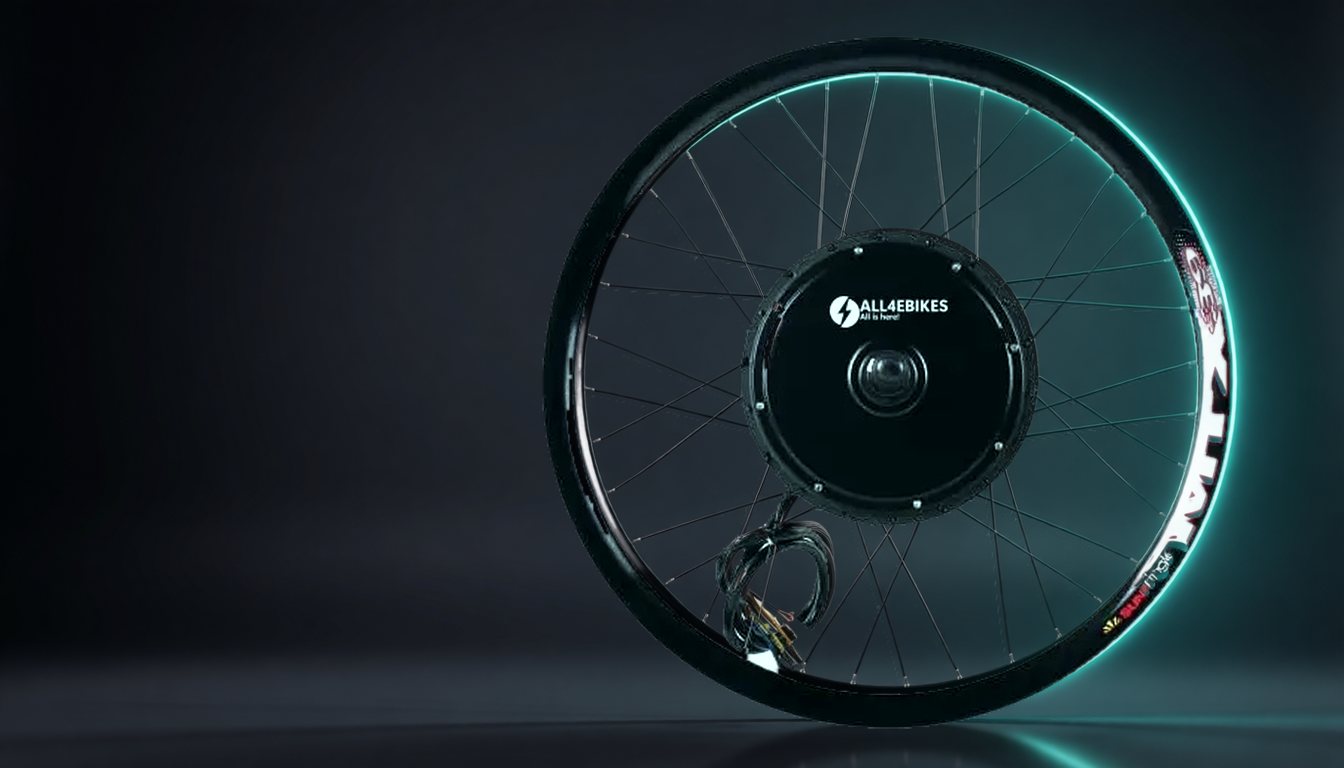
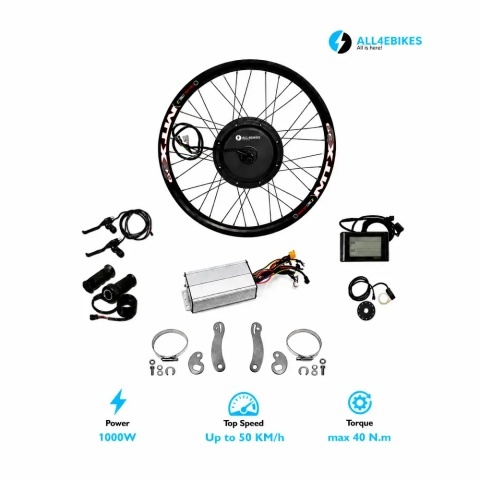
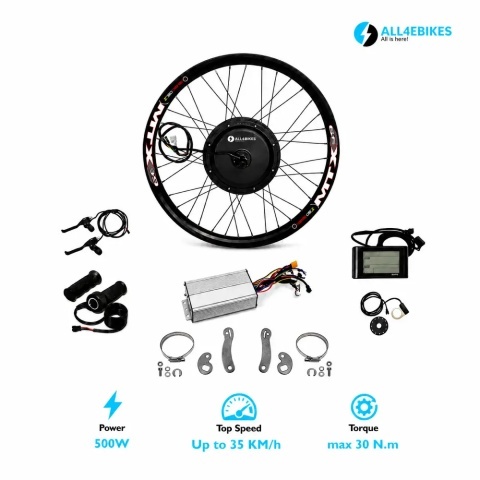
- What's in the box. The motor wheel on a double-wall MTX rim, the freewheel, the controller, the SW900 display, the PAS sensor, a twist throttle, two brake levers with cut-off sensors, two torque arms and the full wiring.
- You choose the power. From 250W, limited to 25 km/h, up to 3000W. If you are not sure how much power you need, our guide on how to choose your kit power helps.
- You choose the battery. Each kit page lists the batteries that fit it, and the estimated range of each one is in the batteries category.
- A clear warranty. 24 months on the motor and 12 months on the other parts and the battery.
Before you order, check the wheel size, the fork width and the brake type. Our kit compatibility guide walks you through these checks. You can fit the kit yourself with the installation guide, or we can fit it for you in Bucharest in 2-3 hours, by appointment on WhatsApp. Contact us to book a slot.
What a kit with a battery costs
Below are the three most popular combinations, with the prices shown on the site on 12 October 2026 and the estimated range of the battery. You already have the bike, so this is the total cost of the conversion. Delivery is free on orders over 500 RON.
| Kit + battery | Range | Total |
|---|---|---|
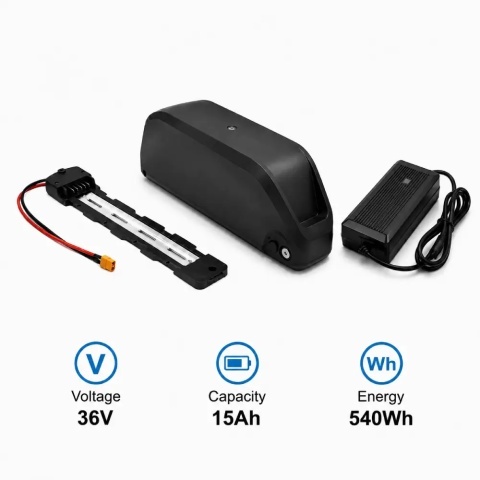
| 250W (1,262 RON) + 36V 15Ah downtube (1,253 RON) |
55-65 km | 2,515 RON |
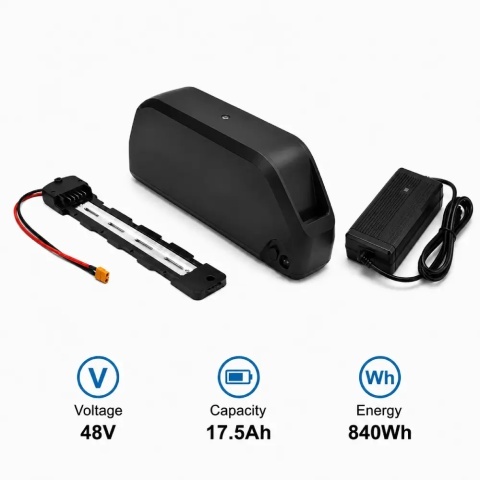
| 500W (1,367 RON) + 48V 17.5Ah downtube (1,507 RON) |
60-80 km | 2,875 RON |
| 1000W (1,514 RON) + 48V 17.5Ah downtube (1,507 RON) |
60-80 km | 3,021 RON |
Each kit page also lists other compatible batteries with more range. The full calculation, with every scenario and the long-term running costs, is in our article on how much it costs to convert a bike to electric.
When you compare with a second-hand listing, add the cost of a new battery to the asking price if you cannot check the existing one. That is the fair comparison: a used bike plus a battery to replace often ends up at the cost of a new kit, but with no warranty on the rest of the system.
When each option wins
| Go second-hand if... | Go for the kit if... |
|---|---|
| You find a bike with a battery under 2 years old, an invoice and a full test | You own a bike with a sound frame that you enjoy riding |
| You want a branded integrated system and accept its original battery | You want to know exactly which battery you have and how much range it gives |
| You have no bike to convert | You want more power than the used models you find |
| The price already allows for a replacement battery | You want a warranty, a right of return and spare parts from the same seller |
There is also a third option: a new, ready-built electric bike. You will find the models in our electric bikes category.
With a second-hand e-bike you mostly pay for the battery, and the battery is the hardest part to check. If it cannot be tested, price in its replacement. If you already own a good bike, a new kit with a battery costs from about 2,500 RON, with a warranty and the power you choose.
Frequently asked questions
Is it worth buying a second-hand electric bike?
It is worth it when the battery has a clear history, you can test the bike fully and the price reflects the wear. Without those three things, you take on the risk of the most expensive part, the battery, with no warranty and no right of return.
How do I check the battery of a used e-bike?
Ask for it to be fully charged and measure the voltage: around 42V for a 36V battery, 54.6V for 48V and 58.8V for 52V. Then take a test ride with some hard acceleration and watch the indicator. A sudden drop when accelerating, a swollen casing or signs of opening all point to a worn battery.
How much does it cost to convert my bike to electric?
At the prices of 12 October 2026, a 250W kit with a 36V 15Ah battery costs about 2,515 RON, and a 1000W kit with a 48V 17.5Ah battery costs about 3,021 RON. Delivery is free on orders over 500 RON.
Can I fit a new battery to a second-hand e-bike?
It depends on the system. Bikes with a universal controller can take a battery that matches the voltage and connector. Integrated branded systems such as Bosch, Shimano or Yamaha need the original battery for that system.
What warranty does a conversion kit have?
The motor in the kit has a 24-month warranty. The other kit components (controller, display, PAS sensor, throttle, brake levers, torque arms, wiring) and the batteries have a 12-month warranty.
Who fits the kit to my bike?
You can fit it yourself in 2-3 hours with the installation guide. If you are in Bucharest, we fit it for you at our workshop in Sector 4, for kits bought from All4eBikes, by appointment on WhatsApp.
Reviews